

Every winter, Utah’s waterfalls and canyon walls freeze into some pretty incredible climbing terrain. From the popular ice routes in Provo Canyon to the frozen formations of Little Cottonwood Canyon, there’s no shortage of places to get out on the ice when conditions are right.
But when exactly is ice climbing season in Utah? And how do you know when the ice is ready to climb?
Unlike skiing, ice climbing doesn’t have a set opening day. The season depends on temperatures, weather patterns, and how the ice develops throughout the winter. Some years, routes form early and stick around well into March. Other years, the climbing window is much shorter.
Whether you’re planning your first guided ice climbing trip or looking to explore a new canyon, we’ll break down the best months to go, what makes for good ice conditions, and where to find some of Utah’s most popular climbs.
Utah Ice Climbing Season at a Glance
| Planning Question | Quick Answer |
|---|---|
| When does ice climbing season start? | Typically December, depending on temperatures and ice formation |
| What are the best months? | January and February are generally the most reliable |
| Can you ice climb in March? | Yes, when temperatures and ice conditions allow |
| How cold does it need to be? | Sustained below-freezing temperatures help ice form, but there’s no universal safe temperature |
| Where can you ice climb? | Provo Canyon, Little Cottonwood Canyon, Big Cottonwood Canyon, and other established Utah climbing areas |
| Can beginners try ice climbing? | Absolutely! Guided trips are available for first-timers with no previous climbing experience |
Table of Contents
- When Does Ice Climbing Season Start in Utah?
- How Cold Does It Have to Be for Ice Climbing?
- Best Places to Go Ice Climbing in Utah
- What Is Ice Climbing Like for Beginners?
- Planning Your Utah Ice Climbing Trip
- Frequently Asked Questions
When Does Ice Climbing Season Start in Utah?
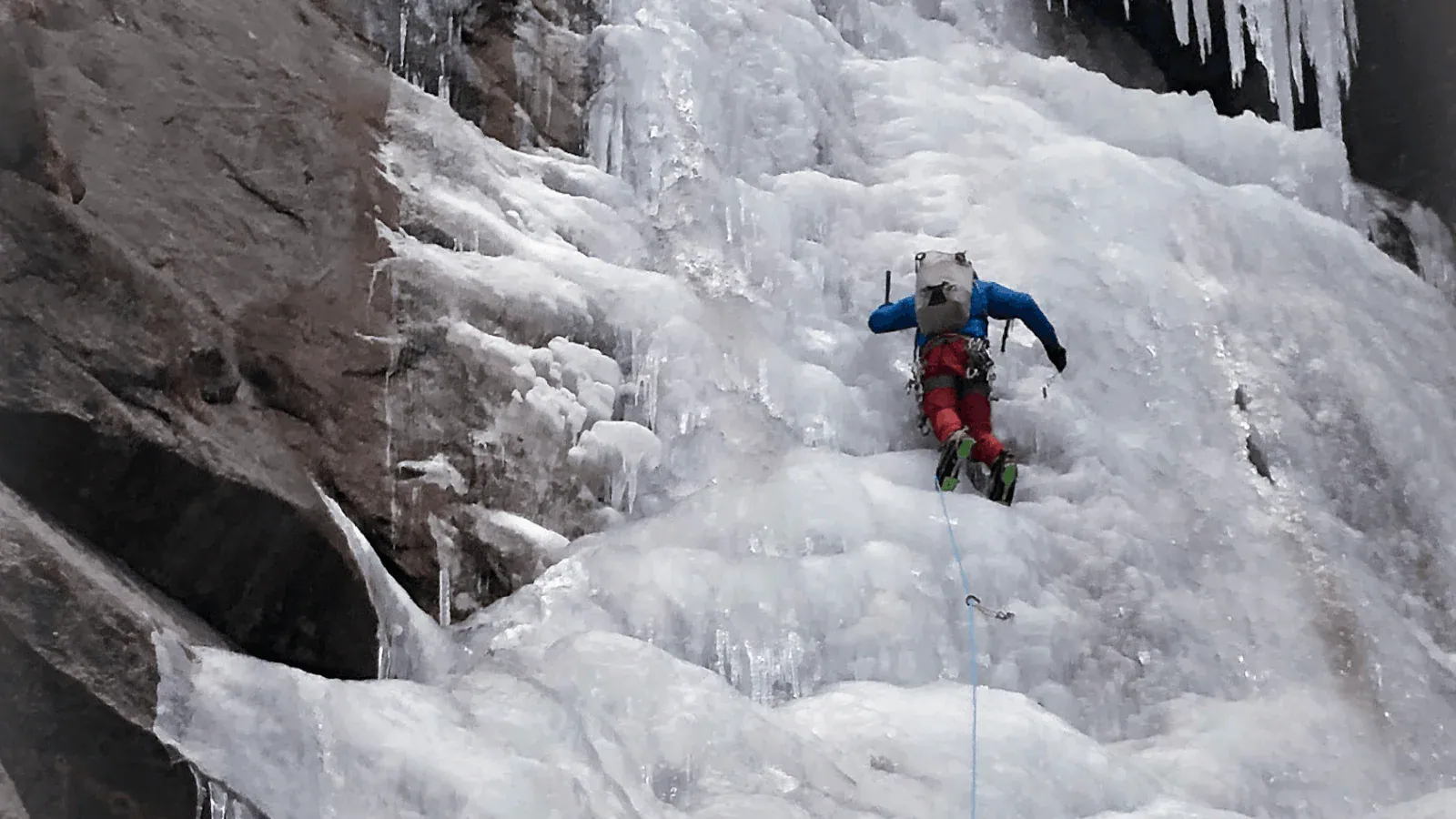
Utah’s ice climbing season typically begins in December and runs through February, with some climbing opportunities extending into March when conditions allow.
Of course, Mother Nature doesn’t always follow the calendar. A stretch of cold weather in November might get some routes forming early, while a warmer start to winter can delay the season.
Here’s a general idea of what to expect throughout the winter.
November to Early December: Ice Starts Forming
As temperatures begin dropping, waterfalls and water seepages throughout Utah’s canyons start freezing. You might see some impressive-looking formations, but that doesn’t necessarily mean they’re ready to climb.
Early-season ice can be thin, inconsistent, or poorly attached to the rock beneath it. Climbers need to be especially selective about routes during this time.
December Through February: Prime Ice Climbing Season
This is generally the best time to go ice climbing in Utah.
By December, colder temperatures often allow established routes in Provo Canyon and the Wasatch Mountains to develop. January and February tend to offer some of the most consistent opportunities, with a wider selection of routes to choose from.
If you’re traveling to Utah specifically for ice climbing, January or February is usually your best bet. Just keep in mind that the exact location may depend on where the ice is looking good when you arrive.
March: Late-Season Ice Climbing
Don’t put away the ice tools just because February is over!
Depending on the winter, some routes can remain climbable into March, especially in shaded areas that don’t receive much direct sunlight.
That said, warmer temperatures and longer days can change ice conditions quickly. A route that was in great shape a week earlier might no longer be suitable.
At Red River Adventures, our guided Utah ice climbing trips generally run from December through March, depending on conditions.
How Cold Does It Have to Be for Ice Climbing in Utah?
Temperatures generally need to stay below freezing (32°F or 0°C) long enough for water to freeze and build substantial ice. But there’s a little more to it than checking the temperature on your weather app.
A frozen waterfall isn’t automatically a climbable waterfall.
Ice climbing routes develop as flowing or seeping water freezes over time. How well that ice forms depends on several factors:
- Sustained cold temperatures: Extended periods of freezing weather help ice build up and develop into established climbing routes.
- Freeze-thaw cycles: Changing temperatures affect ice structure. Some fluctuations can contribute to ice formation, while others can create cracks or weaken sections.
- Sun exposure: Ice that receives direct sunlight may soften or deteriorate faster than shaded routes.
- Water flow: The amount of water moving through a formation affects how the ice builds and changes throughout the season.
- Snowfall and avalanche conditions: Fresh snow and unstable snowpack can create hazards around climbing areas, even when the ice itself looks solid.
Can It Be Too Warm or Too Cold for Ice Climbing?
Yes, although there isn’t one exact temperature that determines whether climbing is safe.
Some well-established ice routes can remain climbable during brief periods of above-freezing temperatures, particularly in shaded locations. But warming weather can also weaken ice and increase the risk of falling formations.
On the other end of the spectrum, extremely cold temperatures can make ice more brittle and prone to fracturing.
That’s why experienced ice climbers pay attention to recent weather patterns, not just the forecast for the day they’re heading out.
The takeaway? Good ice climbing conditions depend on the ice itself, not just the air temperature.
Our guides keep a close eye on conditions throughout the season and choose climbing locations based on the ice, weather, surrounding terrain, and experience level of the group.

Best Places to Go Ice Climbing in Utah
Utah has some incredible ice climbing terrain, particularly in the Wasatch Mountains near Salt Lake City. But not every canyon offers the same experience, and conditions can vary quite a bit from one location to another.
Here are a few of the state’s well-known ice climbing destinations.
1. Provo Canyon: A Utah Ice Climbing Favorite
Provo Canyon is one of Utah’s most popular ice climbing destinations, and for good reason. With a concentration of established routes and beautiful winter scenery, it’s a great place to experience the sport.
Located near Provo, approximately an hour from Salt Lake City under normal driving conditions, the canyon offers everything from introductory climbing opportunities to challenging multi-pitch routes.
Some well-known climbs in the area include Stairway to Heaven and Miller’s Thriller, while the Bridal Veil Falls area is another recognizable landmark associated with the canyon’s climbing history.
The variety of terrain makes Provo Canyon a popular choice for guided ice climbing trips. Depending on conditions, beginners can learn the basics on more approachable ice while experienced climbers tackle more challenging objectives.
Best for: Beginners and experienced climbers, depending on the route.
When to go: Generally December through February, with possible opportunities earlier or later in the season.
2. Little Cottonwood Canyon: Ice Climbing Near Salt Lake City
Most people know Little Cottonwood Canyon for Alta and Snowbird, but skiing isn’t the only winter adventure you’ll find here.
Yes, you can go ice climbing in Little Cottonwood Canyon! The canyon has established ice and mixed climbing routes that develop during periods of sustained cold weather.
Located southeast of Salt Lake City, it’s a convenient option for climbers staying in the area. However, the climbing opportunities are highly dependent on the weather, snowpack, and how individual routes form.
Some routes may be in great shape during a cold stretch, while others might not develop enough ice to climb that season.
Little Cottonwood Canyon also has significant avalanche terrain, and winter storms can lead to road closures and avalanche mitigation work. Access and conditions are important considerations when planning a trip.
Best for: Climbers looking for an ice climbing experience close to Salt Lake City, with routes selected according to conditions and ability.
When to go: Generally midwinter, when sustained cold temperatures support ice formation.
3. Big Cottonwood Canyon: More Wasatch Ice Climbing
Just north of Little Cottonwood Canyon, Big Cottonwood Canyon offers additional opportunities for ice and mixed climbing during the winter.
Like its neighboring canyon, the climbing here depends on how individual routes develop. Some formations may only be suitable during particularly cold stretches, while others can remain in condition longer.
For climbers familiar with the Wasatch, having several nearby canyons to choose from is a major advantage. If conditions aren’t favorable in one area, there may be better options elsewhere.
Best for: Climbers exploring different Wasatch ice climbing areas.
When to go: Generally December through February, depending on conditions.
4. Maple Canyon: Ice Climbing Beyond the Wasatch
Maple Canyon is best known for its summer rock climbing, but winter brings a different kind of challenge.
Located in central Utah, the canyon’s distinctive conglomerate rock formations can develop seasonal ice and mixed climbing routes when temperatures stay cold enough.
It’s a more remote destination than Provo Canyon or the Cottonwood Canyons, and winter access can be challenging due to snow-covered roads and approaches.
For experienced climbers looking to explore beyond the main Wasatch climbing areas, it’s another destination worth knowing about.
Best for: Climbers interested in more remote winter climbing opportunities.
When to go: Midwinter, when temperatures, ice formation, and access conditions align.
Which Utah Ice Climbing Location Is Best?
| Location | What Makes It Worth Visiting | What to Know |
|---|---|---|
| Provo Canyon | Established routes for a range of experience levels | A popular destination for guided beginner trips |
| Little Cottonwood Canyon | Ice and mixed climbing close to Salt Lake City | Route conditions, avalanche hazards, and road access vary |
| Big Cottonwood Canyon | Additional climbing opportunities in the Wasatch | Ice formation is highly route-dependent |
| Maple Canyon | A different climbing environment in central Utah | More remote, with challenging winter access |
If you’re new to ice climbing, you don’t necessarily need to choose a specific canyon before booking a trip.
Our guides lead trips in Big Cottonwood Canyon, Little Cottonwood Canyon, and Provo Canyon, selecting climbing locations based on current conditions and your experience level. That means you can focus on learning the ropes and enjoying your time on the ice while we handle the planning.
What Is Ice Climbing Like for a Complete Beginner in Utah?
Never climbed a frozen waterfall before? You’re in good company!
Ice climbing might look intimidating at first, but you don’t need previous rock climbing experience or your own collection of technical gear to give it a try.
With the right instruction and equipment, beginners can learn the basics and experience the excitement of climbing real ice.
What to Expect on Your First Guided Ice Climbing Trip
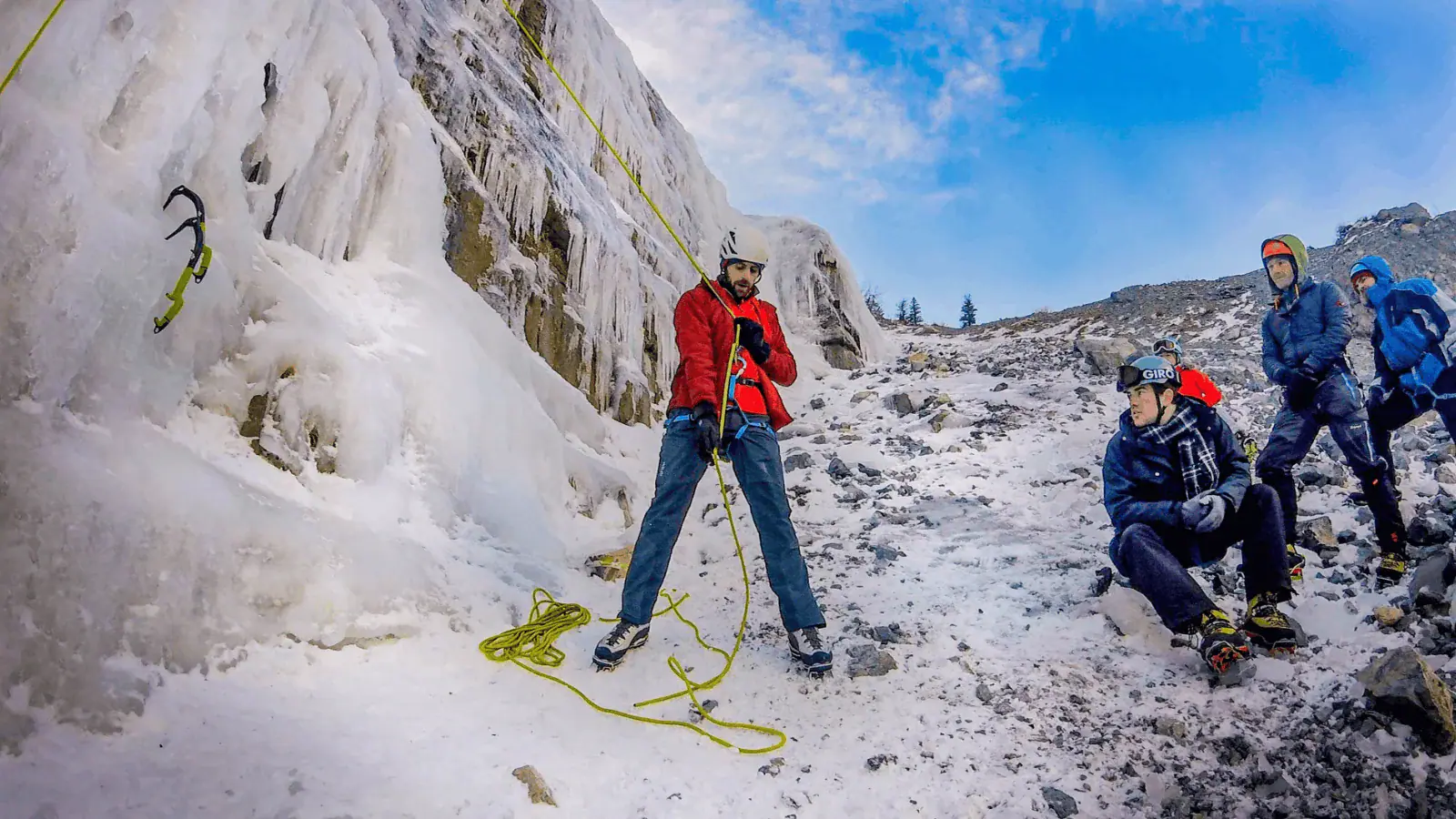
When you join Red River Adventures for a beginner-friendly ice climbing trip, we’ll start by getting you comfortable with the equipment and techniques you’ll use throughout the day.
Here’s a general idea of how your first outing might go:
- Meet your guide and get geared up. We’ll help you get fitted with the technical equipment you need, including a helmet, harness, crampons, and ice tools.
- Learn the basics. Your guide will introduce you to using your feet and tools on ice, along with important climbing and rope safety concepts.
- Get on the ice. You’ll start on a route selected for your abilities and the day’s conditions, with your guide providing instruction and support.
- Build your skills and confidence. As you get more comfortable, you’ll work on your climbing technique and may have opportunities to try additional routes.
And don’t worry, ice climbing isn’t all about upper-body strength. Learning to use your feet and position your body efficiently can make a big difference.
You’ll still get a workout, but you don’t need to be an expert climber to enjoy your first day on the ice.
Do You Need Your Own Ice Climbing Gear?
Nope! Red River Adventures provides the technical climbing equipment needed for our guided trips, including ice tools, crampons, helmets, harnesses, and climbing ropes.
You’ll want to bring your own warm winter clothing, gloves, and other personal essentials. We’ll cover what to pack a little further down.
Should You Choose a Half-Day or Full-Day Ice Climbing Trip?
We offer private guided ice climbing trips for beginners and experienced climbers, with two options depending on how much time you want to spend on the ice.
Half-Day Ice Climbing
A great introduction if you’re trying ice climbing for the first time. You’ll learn the basics, get hands-on instruction, and experience climbing frozen terrain without committing to a full day.
Full-Day Ice Climbing
Want more time to climb? A full-day trip gives you additional opportunities to practice techniques, explore suitable routes, and build on your experience.
Both trips are tailored to your group’s abilities and goals, making them a fun option for individuals, couples, families, and groups of friends.
Explore Our Guided Utah Ice Climbing Trips
Want to Learn More Than the Basics?
If you’re interested in developing your technical skills, we also offer an Intro to Ice Climbing 101 Course.
While our guided day trips focus on getting out and enjoying the climbing experience, our instructional courses spend more time on technique, climbing systems, and foundational skills.
They’re a great next step if you discover that ice climbing is something you want to pursue further.

Planning Your Utah Ice Climbing Trip
Ready to get out on the ice? A little preparation can make your first experience that much better.
When Should You Book an Ice Climbing Trip?
If you’re planning a winter vacation around ice climbing, January and February are generally your best options for more consistent conditions.
Booking ahead is a good idea, particularly if you have specific travel dates or are planning a private trip with friends or family.
Keep in mind that ice climbing is weather-dependent. Even during prime season, conditions can change, and your guide may need to choose a different route or location.
What Should You Wear Ice Climbing?
You’ll be spending several hours outside in winter mountain conditions, so staying warm and dry is important.
Here’s what we recommend bringing:
- Base layers: Moisture-wicking tops and bottoms to help keep you dry.
- Insulating layers: Fleece or a warm jacket for additional warmth.
- Outer layers: Weather-resistant jacket and pants to protect against snow and wind.
- Gloves: Bring multiple pairs so you have a dry backup.
- Headwear: A thin hat or head covering that fits comfortably beneath a helmet.
- Other essentials: Water, snacks, sunscreen, and sunglasses.
Avoid cotton clothing, which holds moisture and can leave you feeling cold.
How Can You Check Utah Ice Climbing Conditions?
Unlike ski resorts, ice climbing areas don’t typically have an official opening day or daily report telling you which routes are ready to climb.
If you’re planning an independent outing, a few resources can help you understand current conditions:
- Utah Avalanche Center: Check avalanche forecasts and advisories for the area you’re visiting.
- UDOT Traffic: Review canyon road conditions, closures, and travel restrictions.
- Local climbing reports: Recent observations from experienced local climbers can provide useful information about how routes are forming.
- Weather forecasts: Look at recent temperature trends and precipitation, not just the forecast for your climbing day.
These resources are helpful, but they don’t replace evaluating the ice and surrounding terrain in person.
That’s one of the advantages of climbing with an experienced local guide. Instead of trying to figure out which routes are in condition on your own, you can leave the technical planning to someone familiar with the area’s winter climbing terrain.
Get Out on the Ice with Red River Adventures
Utah’s ice climbing season may be relatively short, but there’s a lot to experience while the waterfalls are frozen.
From your first swing of an ice tool to exploring more challenging routes, the Wasatch Mountains offer an exciting way to spend a winter day outside.
At Red River Adventures, we love introducing people to ice climbing and helping experienced climbers explore new terrain. Our private guided trips are tailored to your experience level, with professional instruction, technical equipment, and climbing locations selected based on current conditions.
Whether you’re visiting Salt Lake City for the winter or looking for a new adventure close to home, we’d love to get you out on the ice.
Book Your Utah Ice Climbing Adventure
Frequently Asked Questions About Ice Climbing in Utah
When does ice climbing season start in Utah?
Ice climbing season in Utah typically starts in December, once sustained cold temperatures allow waterfalls and other ice formations to develop. January and February are generally the most reliable months, although some routes may form earlier or remain climbable into March.
How cold does it have to be for ice climbing in Utah canyons?
Temperatures generally need to remain below 32°F (0°C) long enough for substantial ice to form. However, there isn’t one exact temperature that guarantees safe climbing. Ice quality depends on recent weather, freeze-thaw cycles, sun exposure, water flow, and other conditions.
Can you go ice climbing in Little Cottonwood Canyon?
Yes! Little Cottonwood Canyon has established ice and mixed climbing opportunities during winter. Conditions vary by route, and access can be affected by avalanche hazards, snowstorms, and road closures. Climbers should evaluate current conditions before heading out.
What is ice climbing like for a complete beginner in Utah?
Beginner ice climbing typically involves learning to use crampons and ice tools before practicing on an appropriate frozen route. On a guided trip with Red River Adventures, you’ll receive technical equipment, instruction, and support from a professional guide. No previous climbing experience is necessary.
Is January or February better for ice climbing in Utah?
Both months are generally excellent choices. January often brings sustained cold temperatures, while February can offer well-developed ice formations. The better month depends on the year’s weather patterns and the conditions at individual climbing locations.
Do you need a guide to go ice climbing in Utah?
Experienced ice climbers with the appropriate equipment, technical skills, and knowledge of ice and avalanche conditions can climb independently where access is permitted. However, beginners should learn with a qualified guide or instructor rather than attempting technical ice climbing on their own.
Where is the best place for beginner ice climbing near Salt Lake City?
Provo Canyon is a popular choice because it offers a variety of established ice climbing routes, including options suitable for guided introductory trips. The best location on any given day depends on current ice conditions, weather, and the climber’s experience level.